Start Here
Your first class at White Lotus: a complete beginner's guide
What to expect, what to wear, how the Reformer works, and a simple plan for your first week, with a goals worksheet to fill in.
Trying a new studio can feel a little nerve-racking, especially if you have never done Pilates or yoga before. This guide walks you through everything, from booking to the moment you step onto the Reformer or your mat. Read it once before you come, fill in the goals worksheet, and bring any questions with you. Our teachers would much rather you ask than worry.
Our classes at a glance
White Lotus is a studio for women and children in Abu Shagara, Sharjah. We teach three main classes, and each one feels a little different.
Reformer
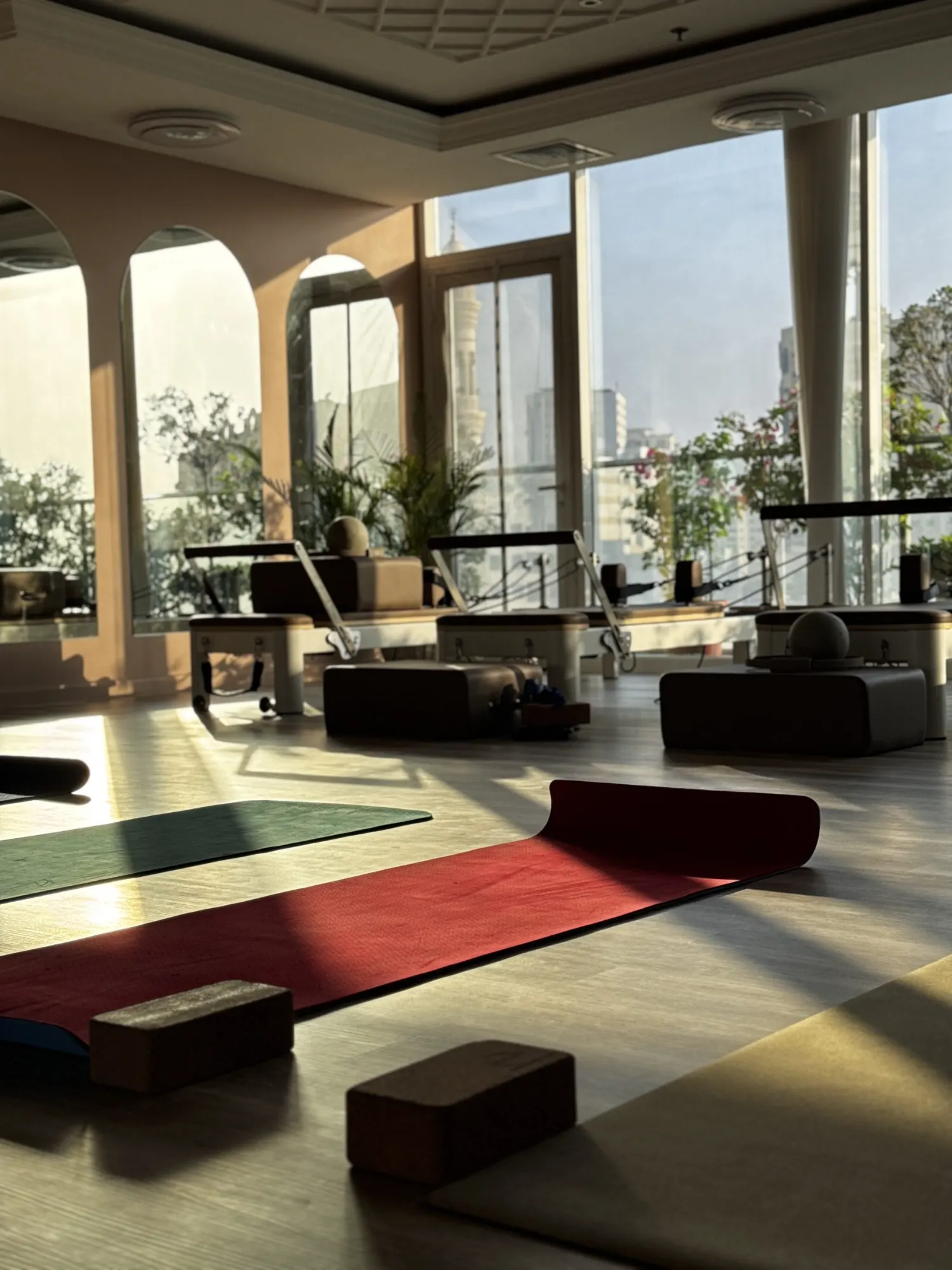
Reformer classes last 50 minutes, with five reformers in the room, so there are never more than five of you. Reformer is booked online with a plan, because places are limited.
Mat Pilates
Mat Pilates classes also last 50 minutes, with up to 10 women. Members can walk in without booking, and you can also book a single class online.
Yoga
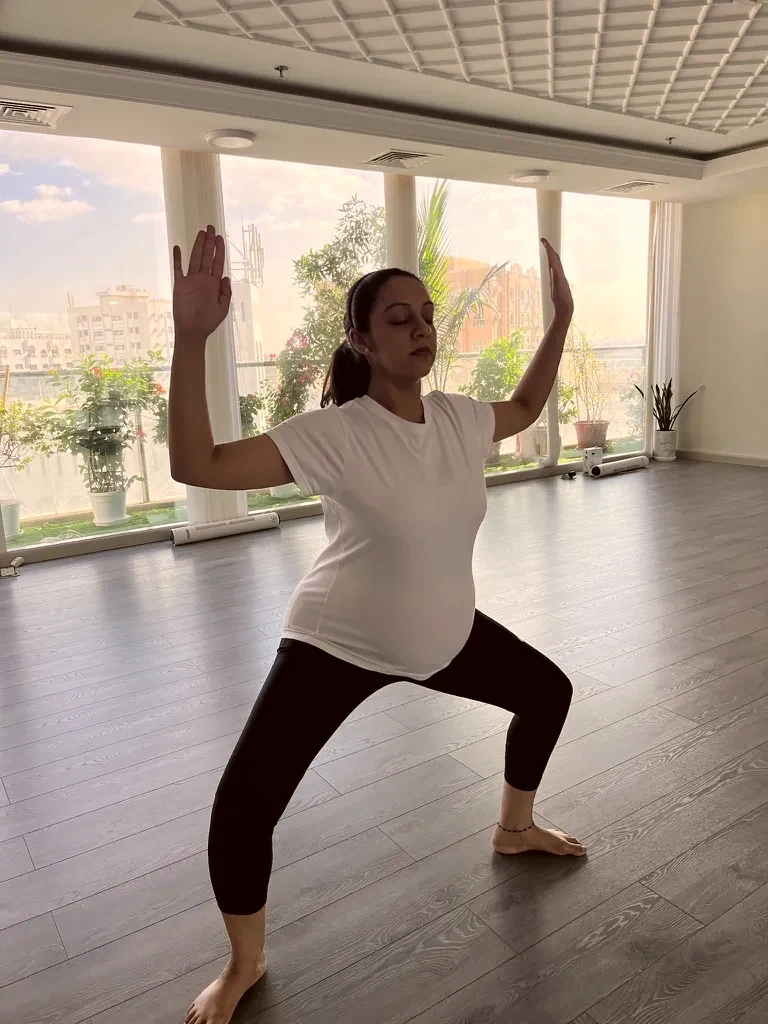
Yoga classes last 60 minutes and stay small. We teach in the classical tradition, so the pace is steady and there is time to settle into each posture.
Class times change through the year, so the live timetable is always on our booking page.
Before you come
Step 1: Book your class
Book on our booking page or send us a message on WhatsApp. If you are new, the Starter Pack is the simplest way in: 4 classes in 10 days, including one Reformer class. You buy it online and pay securely by card.
Step 2: Tell us about your health
Please tell us before your first class if any of these apply to you, so your teacher can plan around them:
- A current or past injury, especially to your back, neck, knees, hips or shoulders
- Pregnancy, or having given birth in the last year
- Recent surgery
- High or low blood pressure, heart conditions, diabetes or dizziness
- Osteoporosis or joint conditions
Everything you share stays private. It simply helps your teacher choose the right options for you.
Step 3: Eat lightly
Have a light meal or snack at least an hour before class. A full stomach makes twisting and lying face down uncomfortable, and an empty one can leave you light-headed.
What to wear and bring
- Fitted, comfortable clothes. Leggings and a fitted top work best, because your teacher needs to see how your hips and spine move. Loose clothes can catch in the Reformer springs.
- Grip socks for Reformer. They stop your feet sliding on the footbar and carriage.
- Bare feet for yoga. Mat Pilates can be done barefoot or in grip socks.
- A water bottle. Mats and props are provided.
- Hair tied back and jewellery removed, so nothing gets in the way when you lie down.
When you arrive
Please come 10 minutes early. This gives you time to find the studio in Bin Ojan Tower-6, put your things away and meet your teacher. She will ask a few questions about your body and your goals. For Mat Pilates, arriving early also means you can get your mat before class starts.
Reformer basics, explained simply
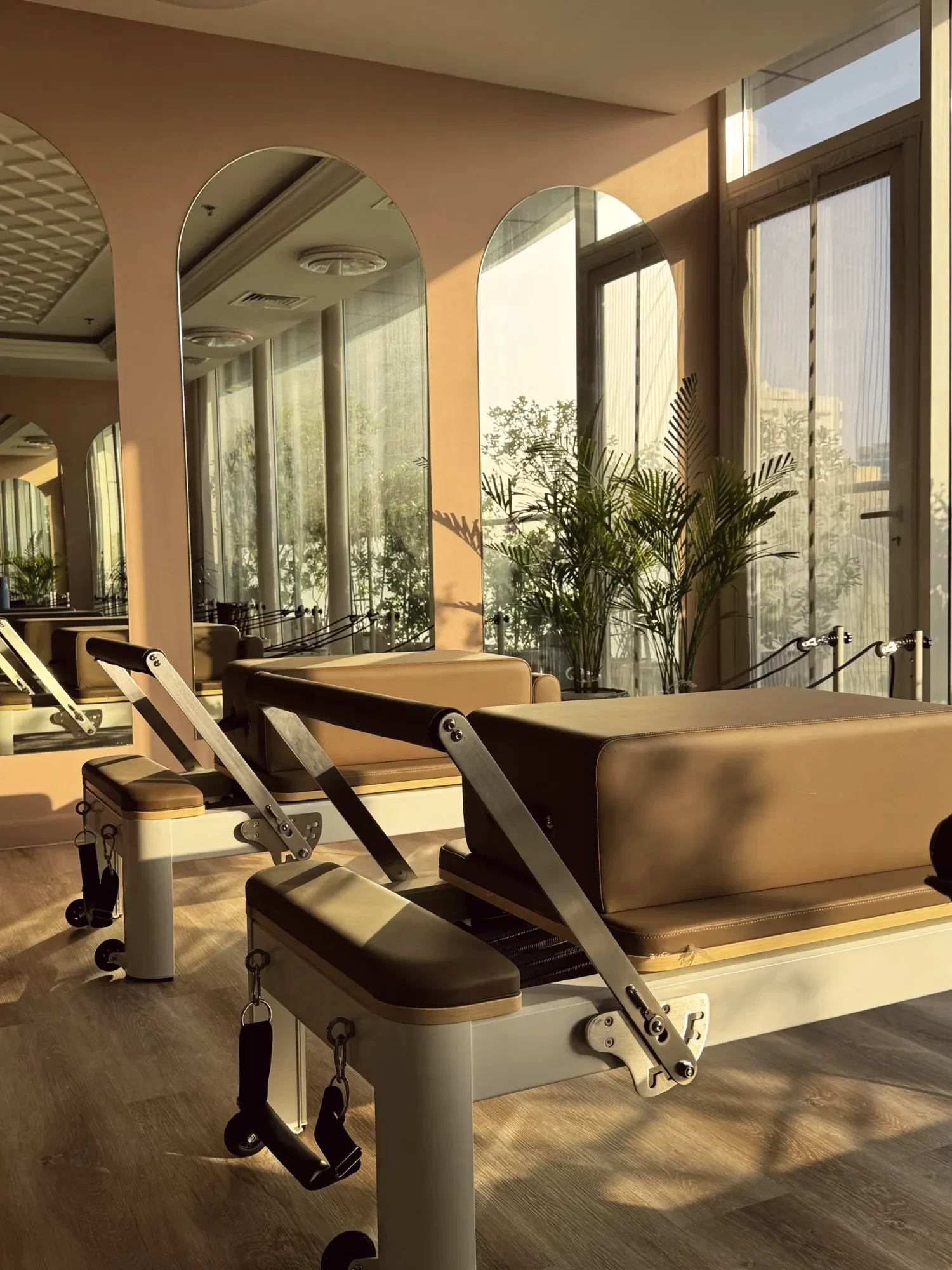
The Reformer looks complicated, but it only has a few parts. Your teacher will show you each one before you begin.
- The carriage is the padded platform you lie, kneel or sit on. It slides back and forth on wheels.
- The springs attach the carriage to the frame. More springs make some movements harder and others easier, so your teacher will set them for you at first.
- The footbar is the bar at one end where you place your feet or hands to push the carriage away.
- The straps are loops attached to ropes. You hold them in your hands or put your feet in them to pull against the springs.
- The headrest and shoulder rests keep you steady and stop you sliding off the end.
The most important rule is to move slowly and keep control as the carriage comes back in. Your teacher will remind you, so don't worry about remembering everything.
The ideas behind Pilates
Joseph Pilates called his method "Contrology" and described it in his 1945 book Return to Life Through Contrology. Later teachers summarised his work into six principles that you will often hear in class. He did not write them as a list himself, but they are a helpful way to understand what your teacher is asking for.
- Breath. Breathe fully and steadily. Many teachers ask you to breathe out as you make the effort.
- Centering. Movement starts from your centre, the deep muscles of your tummy, back and pelvis.
- Concentration. Pay attention to each movement rather than rushing through.
- Control. Every movement is deliberate, with no swinging or flopping.
- Precision. A few careful repetitions are better than many sloppy ones.
- Flow. As you get more confident, movements link smoothly from one to the next.
During your first class
Go at your own pace. Your teacher will offer an easier and a harder version of most exercises, and it is always fine to choose the easier one. You may feel muscles working that you didn't know you had, and that is normal. Sharp pain is not. If anything hurts, stop and tell your teacher straight away.
In yoga, the classical texts describe a good posture as one that is steady and comfortable. Patanjali's Yoga Sutras put it simply: sthira sukham asanam (2.46). Aim for that feeling rather than for how far you can stretch.
After class
Drink some water and eat something light. It is common to feel mild muscle soreness for a day or two, especially after your first Reformer class. A gentle walk usually helps. If you feel pain in a joint, or soreness that lasts longer than a few days, let us know before your next class.
A simple plan for your first week
If you start with the Starter Pack, here is one way to use your 4 classes in 10 days:
- Day 1: Mat Pilates. Learn the basic breathing and core work on the mat.
- Day 3: Yoga. Stretch out and get a feel for the classical style.
- Day 5 or 6: Reformer. Try the springs and carriage once you know the basics.
- Day 8 or 9: Your choice. Go back to the class you enjoyed most, Mat Pilates or yoga.
Leave at least one rest day between classes in your first week. Your body gets stronger while it recovers.
Worksheet
My goals
Print this page or copy the questions into your notes, and bring your answers to your first class.
Why do I want to start Pilates or yoga?
Is there anything my teacher should know about my body?
What would I like to feel or be able to do in 3 months?
Which days and times can I realistically come?
How will I know it is working for me?
Checklist
Before my first class
- I have booked my class or Starter Pack
- I have told the studio about any injury, condition or pregnancy
- I have grip socks (for Reformer)
- I have fitted, comfortable clothes ready
- I have a water bottle
- I will eat lightly at least an hour before
- I will arrive 10 minutes early
Common questions
I have never exercised before. Can I still come?
Yes. Many of our members start with no experience at all. Your teacher will give you simpler options and help you build up slowly.
Should I start with Reformer or Mat Pilates?
Either works. Many women like to start on the mat to learn the basics, then try the Reformer. The Starter Pack lets you try both.
What if I can't keep up?
You don't need to. Go at your own pace, rest when you need to, and choose the easier option. Your teacher is there to help you, not to push you.
Can I come if I am pregnant?
Please talk to your doctor or midwife first, then tell us before you book. Your teacher will adapt the class or suggest prenatal yoga.
What if I need to cancel?
Please let us know at least 8 hours before your class. Late cancellations and no-shows count as attended.
This guide is general information, not medical advice. If you have a health condition, are pregnant or have recently given birth, please check with your doctor before starting a new practice.
Ready when you are
The Starter Pack gives you 4 classes in 10 days for AED 249, so you can try the Reformer, Mat Pilates and yoga before you choose a plan.
Further reading & sources
- Pilates, J.H. & Miller, W.J. (1945). Return to Life Through Contrology.
- Friedman, P. & Eisen, G. (1980). The Pilates Method of Physical and Mental Conditioning. (One of the first books to describe the Pilates principles.)
- Patanjali, Yoga Sutras, 2.46.
- Iyengar, B.K.S. Light on Yoga.
- White Lotus studio guidance.