Sound Healing · Mental Health
Sound healing and sound baths: what to know before you go
What happens in a session, what research says so far, and how to prepare and look after yourself afterwards.
A sound bath is a session where you lie down and rest while a practitioner plays singing bowls, gongs and other instruments around you. You don't need to do anything except listen. Many people say they feel calmer and more rested afterwards. This guide explains what a session is like, what research says so far and where its limits are, how to prepare, and how to look after yourself afterwards.
What happens in a sound bath
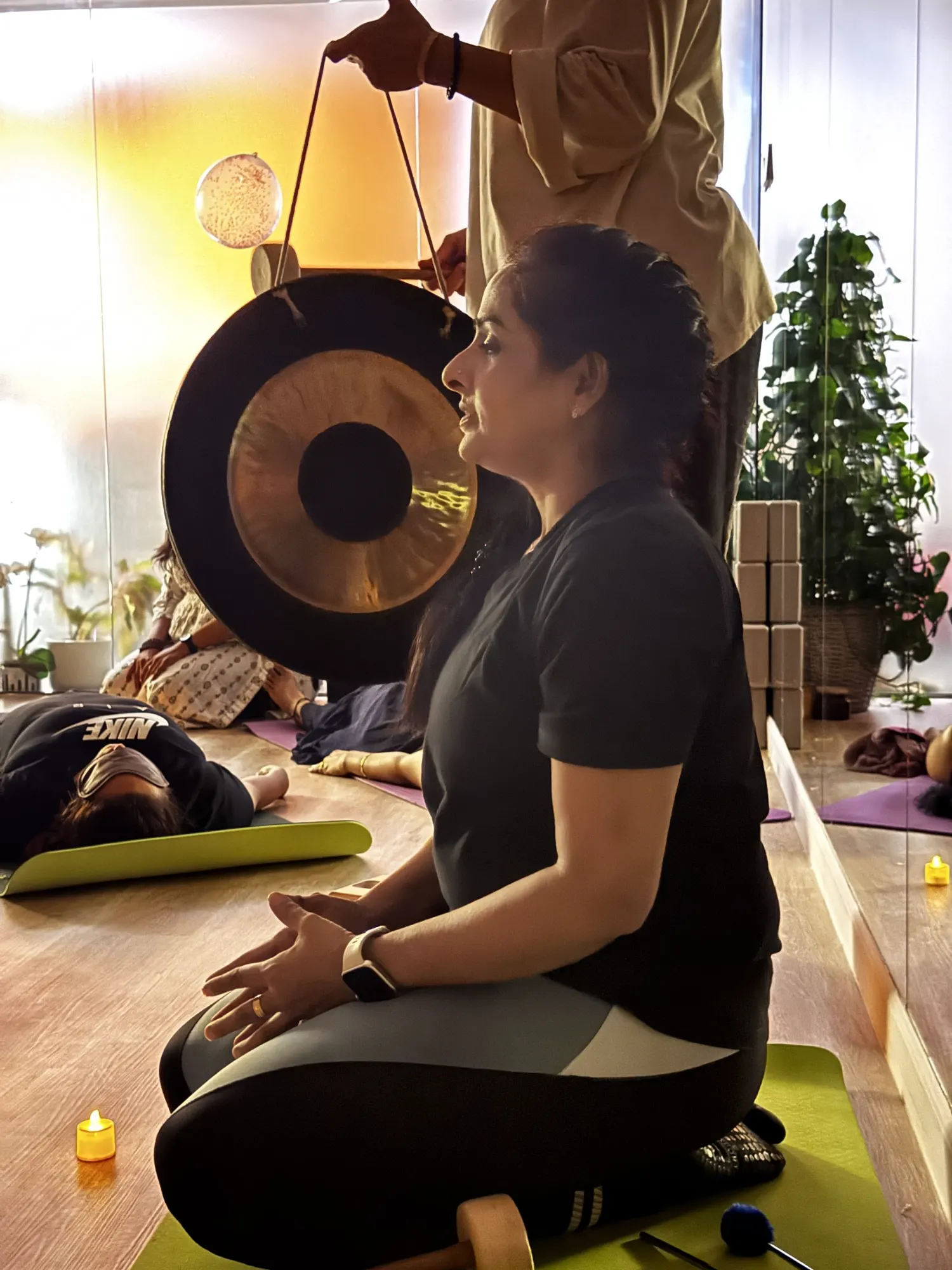
At White Lotus, we hold a group sound healing session once a month, on the full moon, and private sessions on request. Dates for the group session are announced on Instagram.
- Settling in. You arrive, lie down on a mat and get comfortable with a blanket and cushions.
- Breathing. The practitioner guides you through a few slow breaths to help you relax.
- Listening. She plays singing bowls, gongs and other instruments, sometimes softly and sometimes more strongly. The sounds and vibrations wash over you.
- Resting. The sound gradually quietens and you rest in silence for a few minutes.
- Returning. You slowly move your fingers and toes, roll to one side and sit up when you are ready.
What research says so far
Research on sound healing is still at an early stage. One of the most cited studies is by Goldsby and colleagues (2017), published in the Journal of Evidence-Based Complementary & Alternative Medicine. In this observational study, adults filled in a mood questionnaire before and after a singing bowl meditation. On average, they reported less tension, anger, fatigue and low mood afterwards, and people who were new to this kind of meditation reported the biggest drop in tension.
The limits
It is important to be honest about what this kind of study can and cannot tell us.
- There was no control group, so we cannot tell whether the bowls themselves caused the change, or simply lying down and resting.
- People chose to attend, and may have expected to feel better.
- The study measured how people felt shortly after a session, not long-term effects.
So research suggests that sound meditation may help people feel more relaxed in the short term. It is not a proven treatment for any medical or mental health condition, and it is not a replacement for medical care.
Who should check with a doctor first
Sound baths are gentle, but please speak to your doctor before attending if any of these apply to you:
- You are pregnant
- You have epilepsy or a seizure condition
- You have a pacemaker or another implanted medical device
- You have a serious mental health condition, or have experienced trauma that sound or lying still might bring up
- You are very sensitive to sound or have tinnitus
Please tell us about any of these when you book, so the practitioner can keep strong instruments away from you or suggest a different position.
How to prepare
- Eat lightly beforehand, so you are comfortable lying down.
- Wear soft, comfortable clothes and layers, as you may get cool while resting.
- Arrive a few minutes early so you can settle without rushing.
- Switch your phone off or leave it outside.
- Use the toilet before the session starts.
What you might feel
Everyone responds differently, and there is no right way to feel. You might:
- Feel deeply relaxed or drift off to sleep
- Notice tingling or warmth in your body
- See colours or images, or have memories come up
- Feel emotional, or want to cry
- Feel restless, especially in your first session
- Feel nothing in particular, which is also completely fine
If you feel uncomfortable at any point, you can open your eyes, sit up or quietly leave. Let the practitioner know if a sound is too strong.
Bringing the calm home
You don't need instruments to practise listening. Try lying down for five minutes, closing your eyes and paying attention to the sounds around you, near and far, without labelling them. Pair it with slow breathing, making your out-breath a little longer than your in-breath.
Checklist
Aftercare
- Drink a glass of water
- Sit for a moment before standing up
- Take it easy for the rest of the day if you can
- Have a light meal
- Avoid loud places and screens for a little while
- Go to bed a little earlier tonight
- Note how you feel below
Worksheet
Before and after
How do I feel before the session (stress 1–5, energy 1–5)?
How do I feel straight after?
What did I notice during the session?
How did I sleep that night?
Common questions
Do I need any experience?
No. You simply lie down and listen. Many people come to their first sound bath with no meditation experience.
What should I bring?
Just yourself and comfortable clothes. Mats and blankets are provided.
Can I fall asleep?
Yes, and many people do. That is perfectly fine.
Is sound healing safe in pregnancy?
Please check with your doctor first and tell us when you book, so we can adapt the session.
Can sound healing treat anxiety or insomnia?
Research suggests it may help people feel more relaxed in the short term, but it is not a proven treatment. Please speak to your doctor about ongoing anxiety or sleep problems.
This guide is general information, not medical advice. If you have a health condition, are pregnant or have recently given birth, please check with your doctor before starting a new practice.
Ready when you are
Join our monthly full-moon sound bath in Abu Shagara, or ask us about a private session.
Further reading & sources
- Goldsby, T.L., Goldsby, M.E., McWalters, M. & Mills, P.J. (2017). Effects of singing bowl sound meditation on mood, tension, and well-being: an observational study. Journal of Evidence-Based Complementary & Alternative Medicine, 22(3), 401–406.
- Patanjali, Yoga Sutras, 1.2.
- Svatmarama, Hatha Yoga Pradipika.