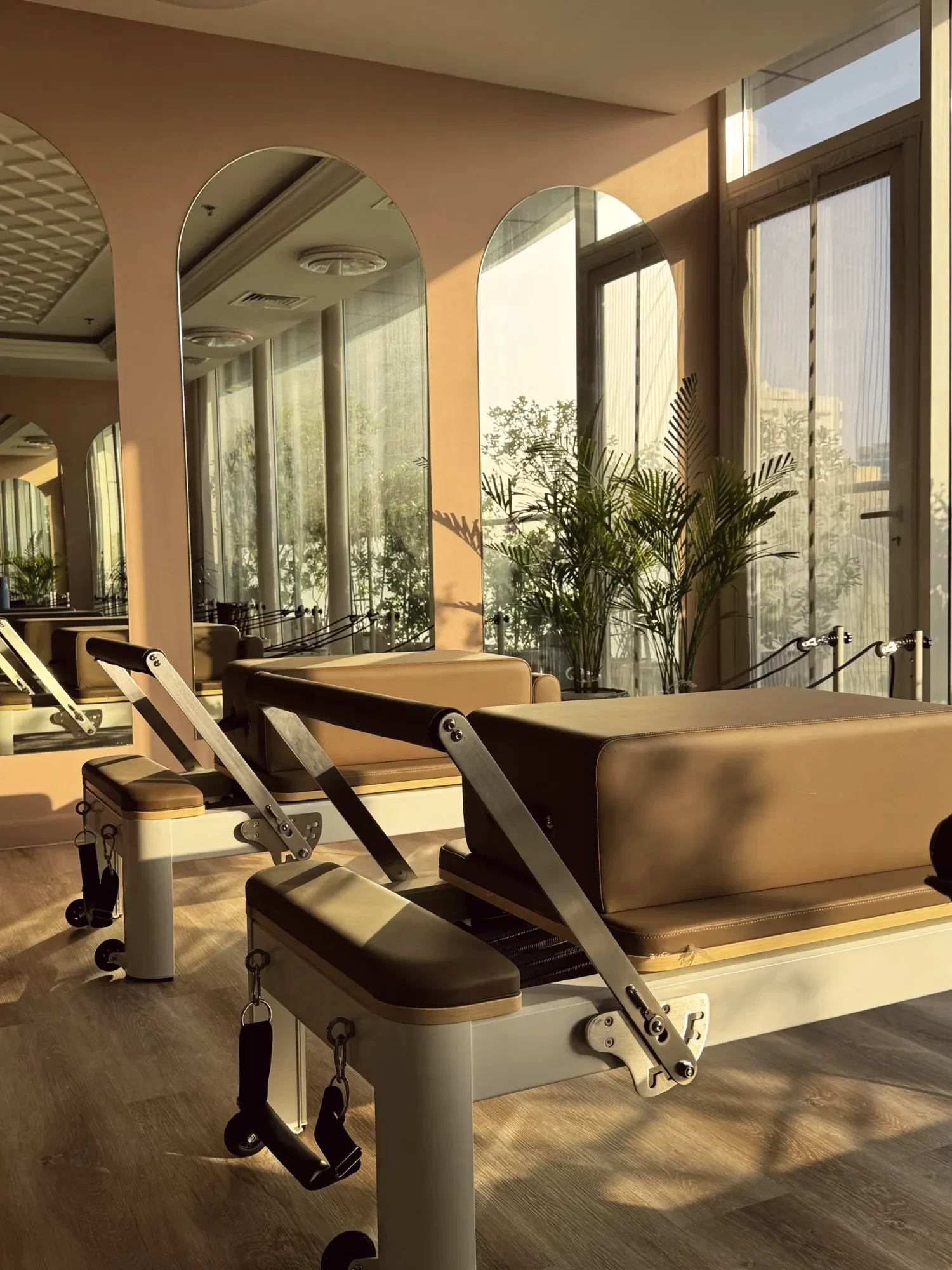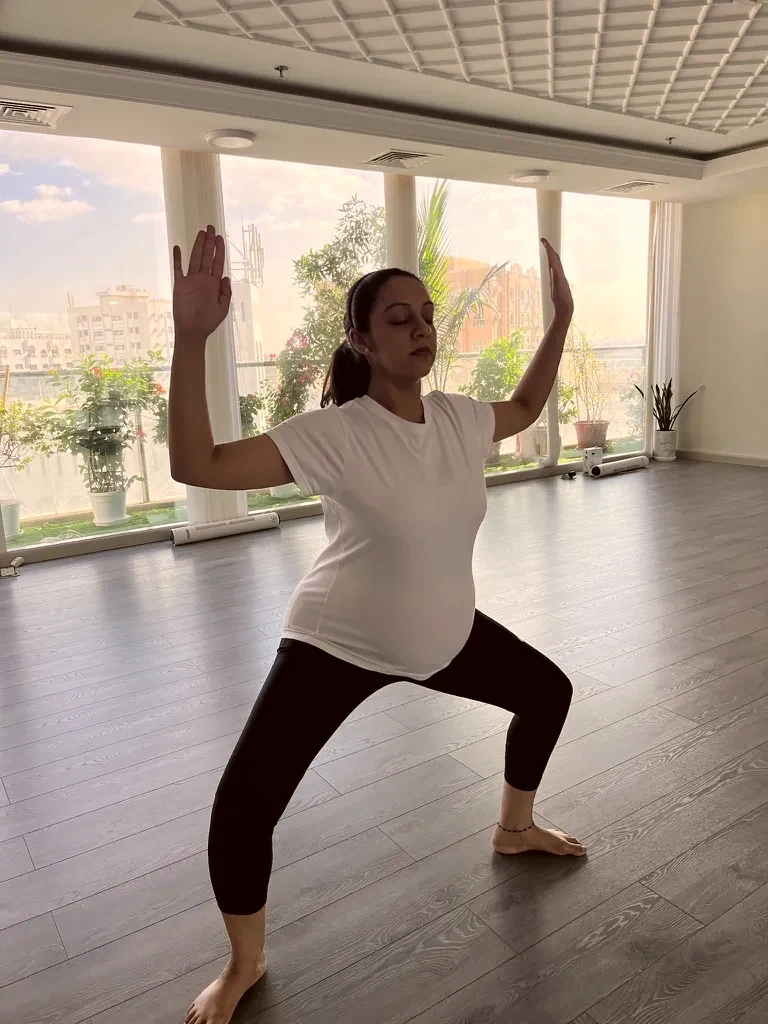
Prenatal yoga practice at White Lotus studio in Abu Shagara, Sharjah

Prenatal & Postnatal

Exercise in pregnancy and after birth: a safe, practical guide

Trimester-by-trimester guidance, warning signs to watch for, and a checklist to take to your doctor before you start.

It is normal to worry about exercise when you are pregnant or have just had a baby. Will it hurt the baby? Is it too soon? What should you avoid? This guide brings together what the main medical guidelines say, explains how we adapt classes at White Lotus, and gives you a checklist to take to your doctor. Always get approval from your doctor or midwife before you start or continue exercising in pregnancy or after birth. Every pregnancy is different, and they know your history.

What the guidelines say

Two widely used guidelines shape our approach. The American College of Obstetricians and Gynecologists (ACOG) Committee Opinion No. 804 (2020) says that women with an uncomplicated pregnancy should be encouraged to stay active before, during and after pregnancy. The World Health Organization's 2020 guidelines say that pregnant and postpartum women without medical reasons to avoid exercise should aim for at least 150 minutes of moderate activity a week, once cleared by their doctor, and can include gentle strengthening and stretching.

Moderate means you are breathing a little harder but can still hold a conversation. Research suggests that regular activity in pregnancy may help with mood, sleep, back pain and healthy weight gain. It does not have to be done all at once. Ten or twenty minutes at a time counts.

When exercise is not advised

ACOG lists some conditions where exercise may not be safe, or needs close medical supervision. These include certain heart or lung conditions, a weak cervix or stitch, placenta praevia later in pregnancy, signs of early labour, waters breaking, pre-eclampsia or high blood pressure in pregnancy, and severe anaemia. Your doctor will tell you if any of these apply to you. If they do, please don't join a class without their written approval.

Trimester by trimester

First trimester (weeks 1 to 13)

Many women feel tired and sick in these weeks. That is normal. If you already exercise, you can usually carry on at a gentler level once your doctor agrees. If you are new to exercise, start slowly with short walks, breathing practice and gentle prenatal yoga. Drink plenty of water and avoid getting too hot, especially in the UAE summer. We don't recommend hot yoga or exercising in heated rooms during pregnancy.

Second trimester (weeks 14 to 27)

Energy often returns now, and many women enjoy moving more. Your bump will start to change your balance, so we avoid exercises with a risk of falling. After the first trimester, ACOG advises avoiding long periods lying flat on your back, because the weight of the womb can press on a large blood vessel and leave you dizzy. Your teacher will prop you up on cushions or use side-lying and seated positions instead. We also avoid deep twists and strong tummy work such as crunches.

Third trimester (weeks 28 to birth)

Movement becomes gentler again. The focus shifts to breathing, comfort, posture, hip mobility and relaxation. Your ligaments are looser now because of pregnancy hormones, so we avoid deep stretches and stay well within a comfortable range. Short, regular practice is better than long sessions.

Warning signs: stop and call your doctor

Stop exercising straight away and contact your doctor or midwife if you notice any of these:

  • Bleeding from the vagina
  • Fluid leaking from the vagina
  • Regular, painful contractions
  • Feeling short of breath before you start exercising
  • Dizziness or feeling faint
  • Headache that won't go away
  • Chest pain
  • Muscle weakness that affects your balance
  • Pain or swelling in your calf
  • Your baby moving less than usual

Breathing and the pelvic floor

The pelvic floor is a hammock of muscles at the base of your pelvis. It supports your bladder, womb and bowel, and it carries extra weight in pregnancy. Gentle pelvic floor exercises are recommended during and after pregnancy.

  1. Sit or lie comfortably and breathe in slowly, letting your ribs and tummy widen.
  2. As you breathe out, gently squeeze and lift the muscles you would use to stop passing wind and urine, as if lifting them up and in.
  3. Hold for a few seconds while you keep breathing, then fully let go.
  4. Repeat up to 10 times, and do a few quick squeezes as well.

Letting go is as important as squeezing. If you find it hard to feel these muscles, or you have leaking, heaviness or pain, ask your doctor about seeing a women's health physiotherapist.

After birth: a gentle return

ACOG says many women can begin gentle exercise soon after birth, once their doctor says it is medically safe. How soon depends on how you gave birth and how you are healing. A caesarean is major surgery and usually needs a longer recovery. As a general guide:

  • First days and weeks: rest, short walks, breathing and pelvic floor exercises if your doctor agrees.
  • After your postnatal check: once your doctor clears you, gentle postnatal yoga and Mat Pilates focused on breath, posture and deep tummy muscles.
  • Over the following months: build up slowly. Reformer and stronger classes can come later, when your doctor agrees and you feel ready.

Some women have a gap between the tummy muscles after pregnancy. Tell your teacher if you have been told you have one, and she will adapt your exercises. Leaking, heaviness or pain are signs to slow down and speak to your doctor.

How we adapt classes at White Lotus

We offer prenatal and postnatal yoga, and our teachers adapt Mat Pilates and Reformer for women who have been cleared by their doctor. Please tell us how many weeks pregnant you are, or how long ago you gave birth, when you book. Your teacher will offer props, change positions and leave out anything unsuitable. You are always free to rest.

Checklist

Doctor clearance: questions to ask

Take this list to your next appointment.

  • Is it safe for me to exercise in this pregnancy, or since giving birth?
  • Are there any conditions that mean I should avoid exercise?
  • Which activities should I avoid?
  • How hard should I work? Is moderate activity right for me?
  • Is there anything about my blood pressure, heart or placenta I should know?
  • After birth: when can I start gentle exercise, and when can I build up?
  • Should I see a women's health physiotherapist for my pelvic floor or tummy muscles?

My doctor's advice

Date cleared and by whom

Worksheet

How I feel this week

DayWhat I didMinutesHow I felt
Mon
Tue
Wed
Thu
Fri
Sat
Sun

Common questions

Is it safe to start yoga or Pilates if I have never exercised before pregnancy?

For many women it is, if your doctor agrees. Start gently, with prenatal yoga or adapted Mat Pilates, and build up slowly.

Can I do the Reformer while pregnant?

Only with your doctor's approval and an experienced teacher. We adapt or leave out exercises that involve lying flat on your back later in pregnancy or a risk of falling.

How soon after birth can I come back?

That depends on how you gave birth and how you are healing. Wait until your doctor clears you, usually at your postnatal check, then start with gentle postnatal classes.

Can I exercise if I had a caesarean?

Yes, once your doctor says your scar has healed. Recovery usually takes longer than after a vaginal birth, so start very gently.

What should I tell my teacher?

Tell her how many weeks pregnant you are or how long ago you gave birth, how you gave birth, and anything your doctor has told you to avoid.

This guide is general information, not medical advice. If you have a health condition, are pregnant or have recently given birth, please check with your doctor before starting a new practice.

Ready when you are

Once your doctor has cleared you, message us and we will suggest the right class, from prenatal yoga to gentle postnatal Mat Pilates.

Further reading & sources

  1. American College of Obstetricians and Gynecologists (2020). Physical Activity and Exercise During Pregnancy and the Postpartum Period. ACOG Committee Opinion No. 804. Obstetrics & Gynecology, 135(4).
  2. World Health Organization (2020). WHO Guidelines on Physical Activity and Sedentary Behaviour.
  3. Svatmarama, Hatha Yoga Pradipika.
  4. Desikachar, T.K.V. The Heart of Yoga.
Back to all guides

Reading is good. Practising is better.

Bin Ojan Tower-6, HC Floor, Abu Shagara, Sharjah · Mon–Sat, 07:30–12:30 & 17:00–20:30

Exercise in Pregnancy & After Birth | White Lotus Sharjah
Prenatal yoga practice at White Lotus studio in Abu Shagara, Sharjah

Prenatal & Postnatal

Exercise in pregnancy and after birth: a safe, practical guide

Trimester-by-trimester guidance, warning signs to watch for, and a checklist to take to your doctor before you start.

It is normal to worry about exercise when you are pregnant or have just had a baby. Will it hurt the baby? Is it too soon? What should you avoid? This guide brings together what the main medical guidelines say, explains how we adapt classes at White Lotus, and gives you a checklist to take to your doctor. Always get approval from your doctor or midwife before you start or continue exercising in pregnancy or after birth. Every pregnancy is different, and they know your history.

What the guidelines say

Two widely used guidelines shape our approach. The American College of Obstetricians and Gynecologists (ACOG) Committee Opinion No. 804 (2020) says that women with an uncomplicated pregnancy should be encouraged to stay active before, during and after pregnancy. The World Health Organization's 2020 guidelines say that pregnant and postpartum women without medical reasons to avoid exercise should aim for at least 150 minutes of moderate activity a week, once cleared by their doctor, and can include gentle strengthening and stretching.

Moderate means you are breathing a little harder but can still hold a conversation. Research suggests that regular activity in pregnancy may help with mood, sleep, back pain and healthy weight gain. It does not have to be done all at once. Ten or twenty minutes at a time counts.

When exercise is not advised

ACOG lists some conditions where exercise may not be safe, or needs close medical supervision. These include certain heart or lung conditions, a weak cervix or stitch, placenta praevia later in pregnancy, signs of early labour, waters breaking, pre-eclampsia or high blood pressure in pregnancy, and severe anaemia. Your doctor will tell you if any of these apply to you. If they do, please don't join a class without their written approval.

Trimester by trimester

First trimester (weeks 1 to 13)

Many women feel tired and sick in these weeks. That is normal. If you already exercise, you can usually carry on at a gentler level once your doctor agrees. If you are new to exercise, start slowly with short walks, breathing practice and gentle prenatal yoga. Drink plenty of water and avoid getting too hot, especially in the UAE summer. We don't recommend hot yoga or exercising in heated rooms during pregnancy.

Second trimester (weeks 14 to 27)

Energy often returns now, and many women enjoy moving more. Your bump will start to change your balance, so we avoid exercises with a risk of falling. After the first trimester, ACOG advises avoiding long periods lying flat on your back, because the weight of the womb can press on a large blood vessel and leave you dizzy. Your teacher will prop you up on cushions or use side-lying and seated positions instead. We also avoid deep twists and strong tummy work such as crunches.

Third trimester (weeks 28 to birth)

Movement becomes gentler again. The focus shifts to breathing, comfort, posture, hip mobility and relaxation. Your ligaments are looser now because of pregnancy hormones, so we avoid deep stretches and stay well within a comfortable range. Short, regular practice is better than long sessions.

Warning signs: stop and call your doctor

Stop exercising straight away and contact your doctor or midwife if you notice any of these:

  • Bleeding from the vagina
  • Fluid leaking from the vagina
  • Regular, painful contractions
  • Feeling short of breath before you start exercising
  • Dizziness or feeling faint
  • Headache that won't go away
  • Chest pain
  • Muscle weakness that affects your balance
  • Pain or swelling in your calf
  • Your baby moving less than usual

Breathing and the pelvic floor

The pelvic floor is a hammock of muscles at the base of your pelvis. It supports your bladder, womb and bowel, and it carries extra weight in pregnancy. Gentle pelvic floor exercises are recommended during and after pregnancy.

  1. Sit or lie comfortably and breathe in slowly, letting your ribs and tummy widen.
  2. As you breathe out, gently squeeze and lift the muscles you would use to stop passing wind and urine, as if lifting them up and in.
  3. Hold for a few seconds while you keep breathing, then fully let go.
  4. Repeat up to 10 times, and do a few quick squeezes as well.

Letting go is as important as squeezing. If you find it hard to feel these muscles, or you have leaking, heaviness or pain, ask your doctor about seeing a women's health physiotherapist.

After birth: a gentle return

ACOG says many women can begin gentle exercise soon after birth, once their doctor says it is medically safe. How soon depends on how you gave birth and how you are healing. A caesarean is major surgery and usually needs a longer recovery. As a general guide:

  • First days and weeks: rest, short walks, breathing and pelvic floor exercises if your doctor agrees.
  • After your postnatal check: once your doctor clears you, gentle postnatal yoga and Mat Pilates focused on breath, posture and deep tummy muscles.
  • Over the following months: build up slowly. Reformer and stronger classes can come later, when your doctor agrees and you feel ready.

Some women have a gap between the tummy muscles after pregnancy. Tell your teacher if you have been told you have one, and she will adapt your exercises. Leaking, heaviness or pain are signs to slow down and speak to your doctor.

How we adapt classes at White Lotus

We offer prenatal and postnatal yoga, and our teachers adapt Mat Pilates and Reformer for women who have been cleared by their doctor. Please tell us how many weeks pregnant you are, or how long ago you gave birth, when you book. Your teacher will offer props, change positions and leave out anything unsuitable. You are always free to rest.

Checklist

Doctor clearance: questions to ask

Take this list to your next appointment.

  • Is it safe for me to exercise in this pregnancy, or since giving birth?
  • Are there any conditions that mean I should avoid exercise?
  • Which activities should I avoid?
  • How hard should I work? Is moderate activity right for me?
  • Is there anything about my blood pressure, heart or placenta I should know?
  • After birth: when can I start gentle exercise, and when can I build up?
  • Should I see a women's health physiotherapist for my pelvic floor or tummy muscles?

My doctor's advice

Date cleared and by whom

Worksheet

How I feel this week

DayWhat I didMinutesHow I felt
Mon
Tue
Wed
Thu
Fri
Sat
Sun

Common questions

Is it safe to start yoga or Pilates if I have never exercised before pregnancy?

For many women it is, if your doctor agrees. Start gently, with prenatal yoga or adapted Mat Pilates, and build up slowly.

Can I do the Reformer while pregnant?

Only with your doctor's approval and an experienced teacher. We adapt or leave out exercises that involve lying flat on your back later in pregnancy or a risk of falling.

How soon after birth can I come back?

That depends on how you gave birth and how you are healing. Wait until your doctor clears you, usually at your postnatal check, then start with gentle postnatal classes.

Can I exercise if I had a caesarean?

Yes, once your doctor says your scar has healed. Recovery usually takes longer than after a vaginal birth, so start very gently.

What should I tell my teacher?

Tell her how many weeks pregnant you are or how long ago you gave birth, how you gave birth, and anything your doctor has told you to avoid.

This guide is general information, not medical advice. If you have a health condition, are pregnant or have recently given birth, please check with your doctor before starting a new practice.

Ready when you are

Once your doctor has cleared you, message us and we will suggest the right class, from prenatal yoga to gentle postnatal Mat Pilates.

Further reading & sources

  1. American College of Obstetricians and Gynecologists (2020). Physical Activity and Exercise During Pregnancy and the Postpartum Period. ACOG Committee Opinion No. 804. Obstetrics & Gynecology, 135(4).
  2. World Health Organization (2020). WHO Guidelines on Physical Activity and Sedentary Behaviour.
  3. Svatmarama, Hatha Yoga Pradipika.
  4. Desikachar, T.K.V. The Heart of Yoga.
Back to all guides

Reading is good. Practising is better.

Bin Ojan Tower-6, HC Floor, Abu Shagara, Sharjah · Mon–Sat, 07:30–12:30 & 17:00–20:30

Book a Session